How To Fix Your Money In 30 Days (The 60/20/20 System)
A week-by-week plan to go from financial chaos to a fully automated budget, even if you’ve never stuck to a budget before.

Most people don't have a money problem. They have a structure problem.
The money comes in. It sits in one account. Bills come out at random times throughout the month. Spending happens somewhere in between. Saving happens if there's anything left, which there usually isn't. And by the end of the month, the paycheck is gone and nobody can explain exactly where it went.
This isn't a discipline issue. It's a design issue. Your money doesn't have a system, so it does whatever gravity pulls it toward, and gravity always pulls toward spending.
I know this because I lived it. For longer than I'd like to admit, I earned money, watched it disappear, and then told myself I'd "do better next month." Next month never came. What came instead was the same cycle, the same confusion, and the same quiet shame of being a functioning adult who couldn't explain where her paycheck went.
What fixed it wasn't a mindset shift. It wasn't a book. It wasn't an app. It was 30 days of building one system — the 60/20/20 split — piece by piece, until the system ran itself and I didn't have to think about money anymore. Not because I was ignoring it, but because the infrastructure was handling it for me.
This newsletter is that 30-day plan. Not theory. Not motivation. A literal week-by-week walkthrough of how to go from financial chaos to a fully automated budget in one month. Each week has one job. By the end of day 30, your money has a home, a job, and a direction, and you never have to manually budget again.
If you've tried budgeting before and quit, this is your reset. Not because this system is magic, but because this time you're building it in the right order.
Week 1: The Audit (Days 1–7)
Before you build anything, you need to see the damage. Most people skip this step because it's uncomfortable, and that's exactly why their budgets fail by week three. They build a system on top of assumptions instead of facts, and the assumptions are always wrong.
This week has one job: find out where your money is actually going.
Day 1 — Pull your last 3 months of bank statements.
Every account. Every card. Don't skip the ones you're embarrassed about. Download them as PDFs or CSVs if your bank allows it. If you only have one account, this is easy. If you have multiple, consolidate everything into one place.
Days 2–3 — Categorize every transaction.
Go line by line and sort every expense into one of three buckets:
Essential: rent, utilities, transport, groceries, insurance, data, subscriptions you genuinely use. The stuff that, if unpaid, makes your life visibly harder within 30 days.
Discretionary: dining out, entertainment, skincare, clothes, impulse purchases, delivery fees, the random online order at midnight. The stuff you chose to spend on.
Future: savings transfers, investment contributions, debt payments beyond the minimum. The stuff that builds something.
Don't judge yourself during this process. You're not looking for things to feel bad about. You're collecting data. Shame is not a financial strategy.
Days 4–5 — Calculate your percentages.
Add up each bucket. Divide by your total income for that period. Now you have three numbers, the percentage of your income going to essentials, discretionary spending, and your future.
Write them down. These are your "before" numbers. In 30 days, they'll look completely different.
Days 6–7 — Find the leaks.
Look at your essential spending. Is anything in there that isn't actually essential? Subscriptions you forgot about? A gym membership you haven't used in four months? An insurance plan you've been meaning to switch?
Look at your discretionary spending. What's there that added nothing to your life? Not what "should" be cut, what genuinely added nothing. The food delivery on a Tuesday when you had groceries at home. The fourth streaming service you haven't opened in weeks.
Don't cut anything yet. Just mark the leaks. You'll fix them in Week 2.
Week 2: The Setup (Days 8–14)
You've seen the numbers. You know where the money goes. Now you build the infrastructure that redirects it.
This week has one job: open the three accounts and set up the system.
Day 8 — Open two new bank accounts.
You already have your main account where your paycheck lands. That becomes your Bills Account (60%). Now open two more:
The Freedom Account (20%) — this is your guilt-free spending account. Separate bank or same bank, doesn't matter. Just make sure it's a separate account with its own debit card.
The Future Account (20%) — this is your savings and investing account. Ideally a high-yield savings account so your money earns interest while it sits. If your bank doesn't offer one, any separate savings account works for now.
Day 9 — Name the accounts.
This sounds trivial. It's not. Open your banking app and rename each account:
Your main account becomes "Bills" or "Operations."
Your spending account becomes "Freedom" or "Mine."
Your savings account becomes "Future" or "Build."
The names create a psychological boundary. When you see "Freedom" on a card, spending from it feels intentional. When you see "Future" on a savings account, skipping a transfer feels like stealing from yourself. Names shape behavior more than numbers do.
Days 10–11 — Cancel the leaks.
Go back to the leaks you identified in Week 1. Cancel the subscriptions you don't use. Switch the plans you've been overpaying for. Downgrade the services you can live without. This isn't about deprivation, it's about redirecting money that was being wasted toward the three buckets where it actually does something.
Days 12–13 — Set up automatic transfers.
This is the most important step in the entire 30 days.
Go into your banking app and create two automatic transfers that trigger on payday:
Transfer 1: 20% of your net paycheck → Freedom Account
Transfer 2: 20% of your net paycheck → Future Account
The remaining 60% stays in your Bills Account for essentials.
These transfers should fire automatically every single pay cycle without you touching them. The entire point of this system is that your money moves before your emotions get a chance to renegotiate.
Day 14 — Set up automatic bill payments.
Every recurring bill that allows autopay — rent, utilities, insurance, phone, data, set it to auto-debit from your Bills Account. The fewer manual payments you make each month, the fewer chances your brain has to interfere.
By the end of Day 14, your system is built. Money comes in, splits automatically, and bills pay themselves. The machine is running.
Week 3: The Test (Days 15–21)
The system is live. Now you stress-test it.
This week has one job: live inside the system for 7 days without breaking it.
Day 15 — Switch to your Freedom card for all discretionary spending.
From today forward, every non-essential purchase goes on the Freedom Account debit card. Coffee, lunch out, entertainment, shopping, snacks all of it. Your Bills Account card stays home. Your Future Account doesn't get touched.
This is the week where the system meets real life, and real life will push back. You'll reach for the wrong card out of habit. You'll see the Freedom balance drop faster than expected. You'll feel the urge to transfer money from Future to Freedom "just this once."
Don't. The system only works if the boundaries hold.
Day 16 — Track your Freedom spending.
Just for this week, write down every purchase you make from the Freedom Account. Not to judge, to observe. You're learning your own spending patterns in real time. How fast do you burn through 20%? What triggers the biggest spending days? What purchases felt worth it and which ones didn't?
Days 17–19 — Adjust in real time.
If your Freedom Account is draining too fast, don't panic. Ask yourself: am I spending on things that actually improve my day, or am I spending out of boredom, habit, or stress? If it's the first one, your 20% allocation might need to be higher temporarily. If it's the second, the spending pattern is the problem, not the budget.
If your Bills Account has money left over after all essentials are paid, that's a sign your 60% allocation is too high. Redirect the surplus into your Future Account at the end of the month. Don't let it sit in the Bills Account, idle money in an accessible account always gets spent.
Day 20 — Check your Future Account.
Open it. Look at the balance. That number didn't exist three weeks ago. You built it in 20 days by doing nothing except setting up a system and letting it run. This is what automation does, it builds wealth in the background while you live your life in the foreground.
Day 21 — Write down how you feel.
Not your numbers. How you feel. Do you feel less anxious about money? More in control? Surprised by how much you spent or how much you saved? This matters because the emotional shift is what makes people stick to a budget long-term. Numbers keep the system running. Feelings keep you from quitting.
Week 4: The Lock-In (Days 22–30)
The system works. You've tested it. Now you lock it in so it runs forever.
This week has one job: make the system permanent and impossible to accidentally break.
Day 22 — Review your three percentages again.
Recalculate how your money split across the three buckets this month. Compare it to your "before" numbers from Week 1. If the gap is significant, you've just proven to yourself that structure beats willpower every single time.
Days 23–24 — Optimize the splits.
The 60/20/20 rule is a starting point, not a law. After living inside it for three weeks, you'll know whether it fits your actual life.
If your bills are consistently under 60%, lower the allocation and redirect the difference to your Future Account.
If your Freedom spending felt too tight, bump it to 25% and drop Future to 15% temporarily. A budget you follow at 80% accuracy is better than a perfect budget you abandon.
If your Future Account felt too easy to fund, increase it. The faster this bucket grows, the faster your financial trajectory changes.
Days 25–26 — Structure your Future Account.
Now that you have money consistently flowing into this account, give it sub-categories:
Emergency fund comes first. Build it until it covers one month of essential expenses (your 60% number). Once it's funded, redirect that portion into investing.
Sinking funds come second. Small pots for predictable irregular expenses — travel, gifts, tech, annual subscriptions. Fund them monthly so they never surprise you.
Long-term investing comes third. Once your emergency fund is solid and sinking funds are running, start directing surplus into index funds or whatever investment vehicle matches your timeline.
Days 27–28 — Remove all remaining friction.
Delete saved card information from shopping sites. Remove one-click purchase settings from apps. Unsubscribe from promotional emails that trigger impulse spending. Every source of friction you add between yourself and an unplanned purchase is a layer of protection for your budget.
Day 29 — Set a calendar reminder.
Set a monthly reminder — same day each month, 15 minutes — to review your three-bucket split, check your Future Account growth, and adjust anything that needs adjusting. This is the only ongoing maintenance your budget needs. Fifteen minutes per month. That's it.
Day 30 — You're done.
Not done budgeting. Done building. The system runs itself now. Your paycheck lands, splits automatically, bills pay themselves, Freedom money lives on one card, and your Future Account grows in the background without you thinking about it.
You didn't need more discipline. You needed a better machine.
The bridge
This 30-day plan gave you the timeline. The 60/20/20 post gave you the rule. The 3-Account Setup post gave you the infrastructure.
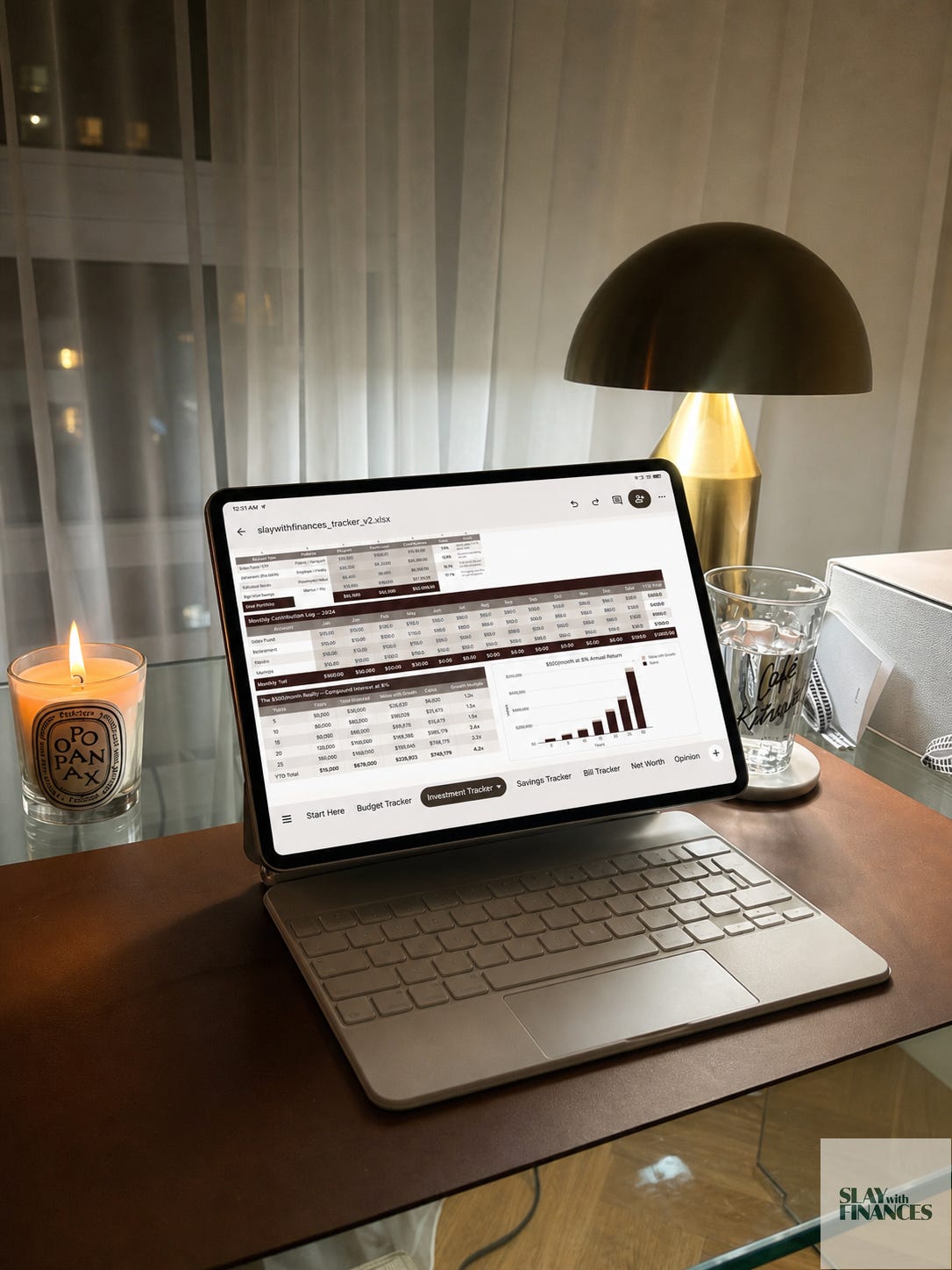
But there's a level deeper than what a free newsletter can cover, the money psychology that keeps you from self-sabotaging at month two, the investing basics that turn your Future Account into actual wealth, and the plug-and-play tracker that makes the monthly review take four minutes instead of forty.
That's what the Millennial's Finance Guide is. The full system, the psychology, the tracker, and the step-by-step education that turns a 30-day reset into a permanent shift in how your money works for you.
Every week without the full system is a week your budget runs on willpower instead of infrastructure. The guide costs less than the impulse purchase you'll forget about by Friday
Finance system here
You already built the machine. The guide is the manual that keeps it running for years.
Start Day 1 tomorrow morning. Pull your bank statements before you go to bed tonight. That's the only move that matters right now.
Then DM me on Day 7 and tell me what you found in the audit. I read every message, and I'll tell you exactly what your numbers mean and what to fix first.
Or drop a comment with your "before" percentages, how much of your income is currently going to essentials, spending, and future. No judgment. Just data. Let's see where you're starting from.
Discussion about this post