


Two weeks ago, I wrote about the 60/20/20 rule, the paycheck budgeting system that finally made saving, spending, and investing feel possible on a beginner income.
The response told me something I should have predicted: most people understood the rule within thirty seconds. The math isn't hard. Split your paycheck into three buckets 60% bills, 20% guilt-free spending, 20% future you. Simple.
But understanding a system and actually building it are two very different things.
The number one question I got after that post wasn't "how does 60/20/20 work?" It was "okay but where do I actually put the money?"
Which banks. How many accounts. What to name them. How to move money between them without thinking about it every payday. How to make the whole thing run on autopilot so the system works even on the weeks when you're tired, distracted, overwhelmed, or just not in the mood to think about money.
That's what this post is. The infrastructure. The plumbing behind the framework. The boring, unsexy, ten-minute setup that turns a budgeting rule into a budgeting machine.
Because here's what most finance content won't tell you: the reason most budgets fail isn't math. It isn't discipline. It isn't willpower. It's friction. Every time you have to manually move money, manually check a balance, or manually decide where a dollar goes, you introduce a moment where your brain can negotiate, procrastinate, or rationalize. And over enough paydays, those moments win.
The fix isn't more motivation. The fix is fewer decisions. Automate the system once, and the system runs itself. That's what the 3-account setup does — it removes you from the equation so the math can do its job without your emotions getting in the way.
By the end of this post, you'll know exactly how to set up three accounts, connect them, automate the splits, and walk away knowing that every paycheck from this point forward is being handled before you wake up on Monday morning.
Let's build it

Account 1 — The Bills Account (60%)
This is your operations account. The one your paycheck lands in. The one your rent, utilities, transport, groceries, data, insurance, and every other non-negotiable expense gets paid from.
This account is not for spending. It's not for saving. It's the engine room of your financial life money comes in, bills go out, and whatever's left after essentials should be close to zero. If it's not close to zero, your 60% allocation is too high and you need to revisit your fixed costs.
How to set it up:
Use whatever bank your salary currently deposits into. Don't overcomplicate this by opening a new account for bills, just repurpose what you already have. The goal is zero friction on the income side.
Go through your last three months of bank statements and list every recurring bill. Add them up. Divide by your monthly income. If that number is above 0.60, you have two options: earn more or cut something. There is no third option and no budgeting hack that fixes a lifestyle math problem.
Set up automatic payments for every bill that allows it. Rent, utilities, subscriptions, insurance anything that recurs monthly should leave this account without you touching it. The fewer manual payments you make, the fewer chances you have to "accidentally" spend bill money on something else.
Name this account something boring. "Bills" works. "Operations" works. Don't name it something aspirational. This account isn't here to inspire you. It's here to keep the lights on.
Account 2 — The Freedom Account (20%)
This is your guilt-free spending account. The one that exists specifically so you can buy the things you want without feeling like you're sabotaging your financial future.
Skincare. Dining out. The concert ticket. The random online purchase at 2am that you don't need but genuinely want. That's what this account is for. And when it's empty, it's empty. No guilt, no shame, no transferring from savings "just this once." The boundary is the balance.
This is the account most budgeting systems skip, and it's exactly why those systems collapse. Deprivation budgets fail for the same reason crash diets fail — the human brain does not respond well to indefinite restriction. When you give yourself a defined container for spending, you actually spend less than when you try to restrict everything and inevitably binge.
How to set it up:
Open a separate account at the same bank or a different one — it doesn't matter, as long as it's separate from your bills account. Physical separation is the entire point. When spending money is mixed in with bill money, everything feels like bill money, and you either overspend out of confusion or underspend out of fear. Neither is healthy.
Set up an automatic transfer from your bills account to your freedom account on payday. The amount is 20% of your net paycheck. It should move automatically, the same day, every single pay cycle. You should never have to think about it or manually initiate it.
Get a debit card linked to this account. Use that card and only that card for discretionary purchases. This creates a clean psychological boundary: when you swipe the freedom card, you're spending money that was already allocated for spending. No guilt, no mental math, no checking your main balance and wondering if you can afford it.
Name this account something that makes you feel good about using it. "Freedom" works. "Life" works. "Mine" works. The name matters because it reframes spending from a source of anxiety into a source of permission.
Account 3 — The Future Account (20%)
This is the account that builds the life you're working toward. Savings, investing, emergency fund, sinking funds everything that isn't for right now goes here.
This account is the reason you're budgeting in the first place. Bills keep you alive. Freedom keeps you sane. But the future account is the one that actually changes your trajectory. Every dollar in here is a dollar working for you instead of you working for it.
How to set it up:
Open a separate savings or investment account. Ideally a high-yield savings account so your money earns interest while it sits. If your bank doesn't offer one, look for a digital bank or fintech app that does even a small interest rate is better than zero, and the difference compounds over years.
Set up an automatic transfer from your bills account to your future account on payday. Same rule as the freedom account: 20% of your net paycheck, automatic, same day, every cycle. This money should leave your main account before you have a chance to rationalize keeping it.
How to structure the money inside this account:
Split it into sub-buckets if your bank allows it, or track the split mentally using a simple spreadsheet.
The emergency fund comes first. Build it until it covers one full month of essential expenses (your 60% number). Once it's funded, redirect that portion into investing or a longer-term savings goal.
Sinking funds come second. These are small pots for predictable irregular expenses — travel, gifts, tech replacements, annual subscriptions, the stuff that always "surprises" you even though it shouldn't. December is not a surprise. Your laptop dying after four years is not a surprise. Your best friend's birthday is not a surprise. Fund them in advance and they stop wrecking your budget.
Long-term investing comes third. Once your emergency fund is solid and your sinking funds are running, start redirecting surplus into index funds, retirement accounts, or whatever investment vehicle matches your risk tolerance and timeline. Even small amounts compound over decades.
Name this account something that reminds you why you're doing this. "Future" works. "Build" works. "Compound" works. You'll look at this account name on days when you're tempted to skip the transfer, make sure the name wins that argument.
The automation layer
The whole system only works if it runs without you. Here's the payday sequence:
Paycheck lands in the bills account. Two automatic transfers fire immediately — 20% to the freedom account, 20% to the future account. 60% stays in bills. Bills get paid automatically throughout the month. You spend from the freedom card. You don't touch the future account.
That's it. Four minutes of setup. Zero minutes of maintenance per month. The system runs itself, and you get to live your life instead of micromanaging every dollar.
If your bank doesn't support automatic transfers between accounts, set a recurring calendar reminder on payday and do it manually for the first three months. After three months of manual transfers, the habit will be strong enough that it feels wrong not to do it, and by then you'll have found a bank that automates it properly.
The mistakes I made so you don't have to
I didn't start with three accounts. I started with one and tried to mentally track three buckets inside it. That lasted about two weeks before the numbers blurred together and I was back to guessing. Physical separation isn't optional, it's the mechanism that makes the whole thing work.
I also set my freedom account too low at first because I wanted to be "disciplined." All that did was make me resent my own budget and blow through the limit every month. The 20% isn't a ceiling to aspire to — it's the minimum your budget needs to survive contact with real life. If anything, I'd rather you start at 25% freedom and 15% future than the other way around. A budget you actually follow beats a perfect budget you abandon.
And I didn't automate for the first few months because I wanted to "stay involved" with my money. What I actually stayed involved with was the weekly anxiety of manually moving money and second-guessing every transfer. Automation isn't laziness. It's the removal of friction, and friction is where budgets go to die.
If you read the 60/20/20 newsletter 2 weeks ago, this is the sequel. That post gave you the rule. This post gave you the infrastructure.
But there's a gap between knowing the setup and actually executing it —the tracker, the templates, the month-by-month walkthrough, the investing basics, the money psychology that keeps you from self-sabotaging the whole thing at month three.
That's what the Millennial's Finance Guide is. The full system in one place. The PDF walks you through everything from budgeting psychology to beginner investing to all the accounts I personally use to build my finances. The Google Sheets tracker is preloaded with the 60/20/20 split, sinking fund categories, and a monthly overview you can update in four minutes. It's priced like a up dinner out because the person reading this should be able to afford the thing that changes how they think about money.
[Direct link to my finance guide]
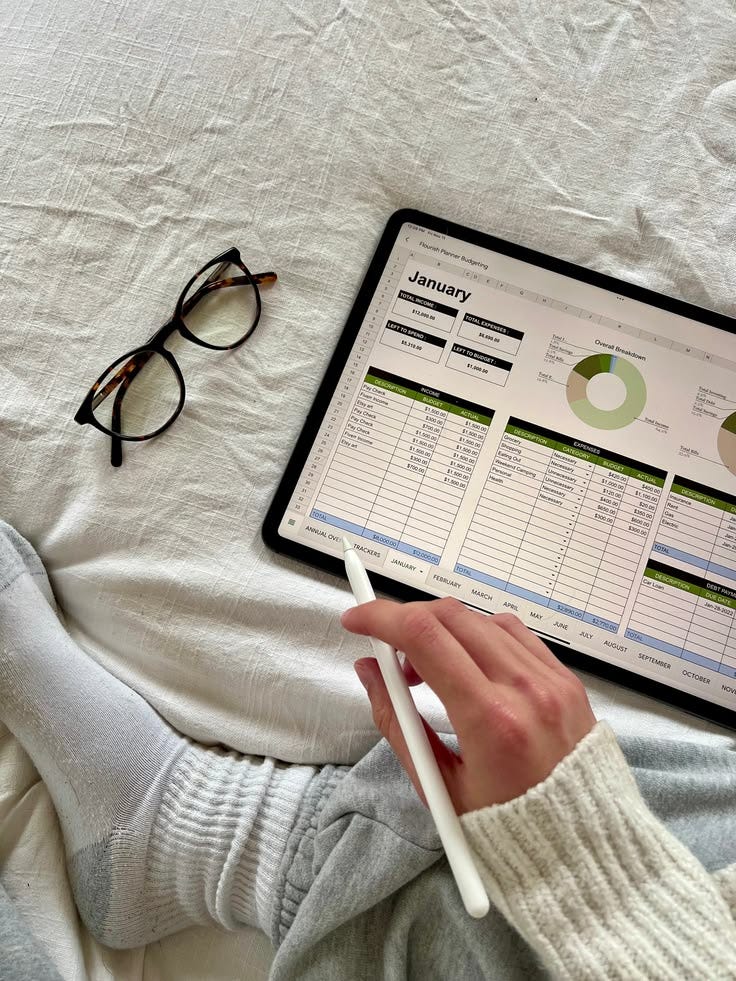
Here's the move: set up the three accounts this week. Even if you don't fund them perfectly yet. Even if your first transfer is 5% instead of 20%. Open the accounts. Name them. Set up the transfers. The structure matters more than the numbers right now — you can optimize later.
Then come back and tell me you did it. I read every reply, and I'll tell you exactly what I'd adjust based on your setup.
Here's the thing about budgeting advice: it's useless until it meets your actual life.
If you're reading this and thinking "okay but my situation is different" — message me privately. I answer my DMs, and sometimes the fastest way to fix a budget is one honest conversation about what's actually going on.
Otherwise, share this with someone who needs it or drop a comment with your setup — I want to know how you're structuring yours.