
While everyone else is scrolling, hedging, and waiting for permission, here's the actual list.
The average phone gets picked up over ninety times a day. That's once every ten minutes you're awake, handed over to something that isn't building your life.
Nobody plans their day around that number. It just happens, in a hundred small surrenders, until the week is gone and nothing moved.
Here's the part worth sitting with: getting ahead right now doesn't require more talent, more hours, or some secret nobody's told you. It requires being one of the few people still spending attention on purpose while everyone else has outsourced theirs to a feed.
That gap is the whole game. Ten specific moves close it. Do the one that scares you first.
Distraction Arbitrage: Why Focus Is Underpriced Right Now
The common story about getting ahead goes like this: work harder, learn faster, know something the next person doesn't. It sounds true. It's also incomplete, because two people with identical skill and identical hours can end up in completely different places, and the difference was never talent. It was where their attention went while nobody was watching.
Here's the reframe. Attention is a market, and right now it's trading at close to zero. Everyone's is available, cheap, and mostly spent on the same handful of things: the feed, the group chat, the next notification. Which means the few people still allocating their attention deliberately aren't working some hidden advantage. They're buying an edge that's currently on sale, because almost nobody else is bidding on it.
Call it distraction arbitrage. The price of focus hasn't gone up. The number of people willing to pay it has gone down. That gap is where the advantage lives.
Think about two people who started the same year, same skill level, same available hours. One spent theirs reacting: replying fast, consuming constantly, staying "in the loop" on everything adjacent to their work. The other spent theirs building: one project, one system, protected hours nobody could touch. A year later, the first person knows more. The second person has more. That's the whole arbitrage in one sentence.
Here's the part that actually stings: you're not behind because you're missing something. You're behind because you've been paying full price, in scattered hours, for an edge that's currently available at a discount to anyone willing to look up from the feed for long enough to take it.
The ten moves below are what that looks like in practice. Ten specific places where distraction usually wins by default, and what it looks like when it doesn't
Let's get into it
1. Pick your game before it picks you.
Nischa, the former banker turned finance writer, talks about two games. The status game and the wealth game. Status is loud, visible, instantly gratifying. Wealth is quiet, invisible, and slow.
“Neither one is wrong”
Some seasons need the status game. Building a personal brand, positioning yourself for a promotion, establishing credibility in a new industry. Visibility is real leverage sometimes. Other seasons need the wealth game. Head down, compounding quietly, letting assets grow in the background.
The problem isn't playing either one. The problem is playing one while pretending you're playing the other.
I've done this. Spent years telling myself I was building wealth when I was actually optimizing for how it looked. The Rolex is not the flex when the invested capital is zero.
Pick the game you're actually playing this season. Own the trade. Update it every quarter.
The move is intention, not virtue.
2. Weaponize your dissatisfaction.
Dan Koe asks a question I steal constantly. What is the dull, persistent dissatisfaction you've learned to live with? Not the big trauma. Not the loud suffering. The small tolerable version.
The Sunday night dread. The scroll you can't stop. The number in your bank account that makes your shoulders climb. The client you no longer respect. The job you keep calling fine to your friends.
Most people numb it. Wine. Content. Shopping. Another course they'll never finish. Anything to keep the low hum quiet enough to ignore for another week.
The move is the opposite.
Let it sharpen. Let it become useful. Every meaningful pivot in my life came from getting absolutely fed up with the version of it I was tolerating. The fed-up was the fuel. Numbing is what turns fuel into fog. And the fog is what keeps most people running in circles for years, busy enough to feel productive, foggy enough never to name what actually needs to change.
You don't have to act on the dissatisfaction today. You do have to stop numbing it
3. You keep chasing goals someone else handed you.
A promotion inside a system you didn't design. A degree in a field you picked at nineteen. A house because everyone else was buying. A business your parents would approve of. A life that pattern-matches to what success is supposed to look like.
Which is why you hit the goals and still feel flat.
I did this for years. Chased things I'd been quietly told were the right things to want. Every time I hit one, the feeling of finally lasted about two weeks before the next one showed up.
Nothing was ever mine.
Pick something that's genuinely, unmistakably yours. A skill you want to be dangerous at. A one-person business only you would build. A project you'd work on for free. A body of work you'd be proud of even if nobody paid you for it.
Start producing it. Consistently. Publicly if you can stand it. For at least a year before you evaluate whether it's working.
The people who quietly overtake their peers almost always do it through something that started as a small personal obsession everyone else thought was a waste of time.
Yours is waiting for you to admit you have one.
4. You're consuming more than you're creating.
You watched a video. You read a book. You saved the newsletter. You bookmarked the thread.
At the end of the hour, you have nothing.
Consumption feels productive because it involves doing something. Learning. Absorbing. Preparing. The problem is that most of what feels like preparation is actually delay. You're building an inventory of ideas you'll never act on because acting requires you to stop consuming.
Creating is different. Ugly at first. Often embarrassing. Also permanent. At the end of the hour there's a thing that didn't exist before, and the thing can be sold, shared, refined, or built on for the rest of your life.
I still catch myself over-consuming when I'm avoiding my own work. Reading five articles instead of writing one. It's the sneaky version of procrastination.
Start writing, not journaling. In public. Get your ideas out of your head where you can see them differently.
Produce more than you consume. The ratio is the whole game.
5. You're letting someone else set the operating system for your day.
Whoever owns your first hour owns your day.
If it's your inbox, you're working someone else's agenda before you've picked yours. If it's your feed, you're operating inside someone else's opinions. If it's the news, you're carrying someone else's fear.
Now, a real caveat. Own your first hour doesn't mean do the hardest thing at 6am. That advice gets sold and it isn't the whole truth.
Different brains have different peak windows. My ADHD does not let me sit down at 7am and write a 2,000-word essay. My brain refuses. What works for me is stacked. Small first — coffee, to-do list, easy emails. Medium mid-day. The hard writing comes late afternoon and evening when my brain is finally sharp. Some of you are the reverse. Wake up sharp, warm oatmeal by 3pm. Some of you can do hard work at any hour.
The move is finding your peak hour. And protecting it like the load-bearing thing it is. No phone. No inbox. No consumption. Just production.
6. Move first, Think later.
If you're overthinking, you're thinking about the wrong variables.
You're thinking about how it'll look if it fails. You're thinking about the exact right pricing, positioning, timing. You're on version 47 of the plan and you have not shipped anything.
Meanwhile the person who shipped a rough version yesterday is already collecting real feedback. Real data. Real information about what works.
I'm still learning this one. My instinct is to polish. To wait until it's ready. Ready is a lie. Ready is what your brain says when it wants you to stall.
Ship the imperfect thing.
Perfectionism is procrastination in an expensive suit.
7. You keep asking "why is this happening to me."
There are two ways to move through your life.
One is as if things are happening to you. Your default question is "why is this happening to me?" You wait for permission. For feedback. For someone to notice. For the raise. For the opportunity. For the right moment that never comes.
The other is as if things are happening because of you. Your default question is "what do I want, and what would it take to build it?" You negotiate. You job-hop when the math stops working. You improve broken processes without being asked. You go self-employed when employment stops serving you. You send the pitch, ask for the meeting, start the business, ship the product.
Same resume. Same talent. Completely different rate of compounding.
The difference isn't intelligence. It's a single default question.
"What do I actually want?"
Ask it. Answer it honestly. Take one action today, every rep gets easier. Six months of daily reps and you are not the same operator.
8. You keep waiting to be discovered.
You think the work should speak for itself. You think self-promotion is icky. You wait to be noticed.
Meanwhile, the average operator posting daily with confidence gets the clients, the followers, the raise, the offers. Not because they're better. Because they're seen.
I've been this person. For years I thought my work should speak for itself. It didn't. Work does not talk. Work is silent. If you don't put it in front of the people who can respond to it, you are producing in a room with the door closed and wondering why no one is knocking.
Visibility is a skill. Audacity is the muscle underneath it. You build it by doing slightly uncomfortable things repeatedly until they stop being uncomfortable.
Post the work. Say the number out loud. Send the pitch. Charge what your work is actually worth.
The world does not reward quiet talent. It rewards visible talent. Not fair. Just true.
9. Frugality is self-respect (not restriction).
The entire creator economy will tell you to spend more. More tools. More coaches. More courses. More subscriptions. More "investments in yourself" that are actually dopamine purchases dressed up as strategy.
Real frugality is not restriction. It's clarity.
Here's what I actually do. Once a month, I open the sheet where every dollar of my life lives, this is the Personal Money Audit I built for myself. I look at what I earned, what I spent, what I kept. I look at the category that grew the most. Then I ask one question. Was that on purpose? If yes, it stays. If no, I cut it.
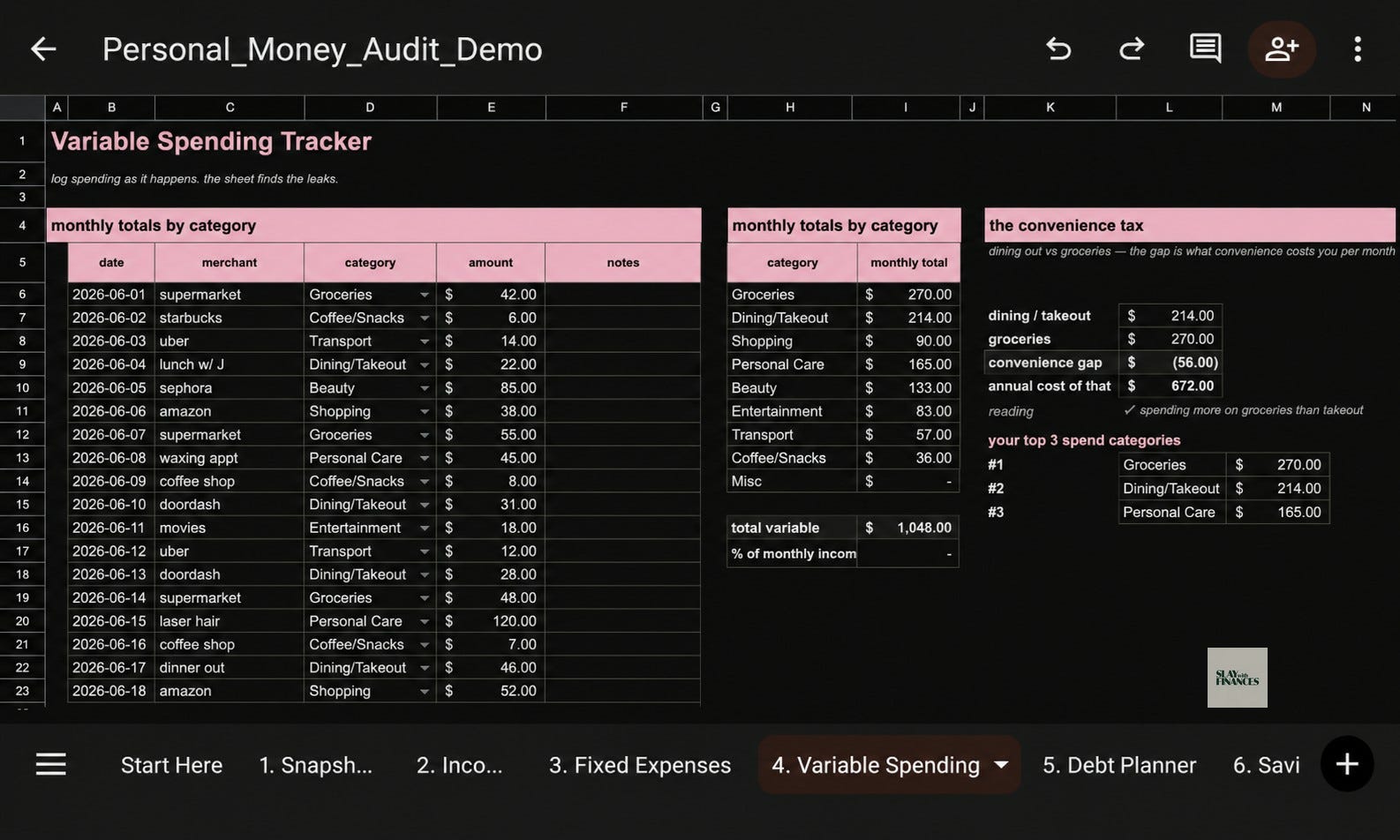
That's the whole practice. You can use this sheet or build your own. What matters isn't the sheet. It's that you have one place where the math actually lives, and one hour a month where you sit with it honestly.
10. Leverage is the whole game.
Everything above compounds. Leverage multiplies.
Compounding is linear over time. You do the small thing every day and six months later the effect is real. That's the thesis of the first nine moves.
Leverage is different. Leverage is when one hour of your work produces outcomes for years. One product that sells while you sleep. One piece of writing that reaches a million people. One system that runs without you. One dollar invested that earns dollars for the rest of your life.
Naval has a line I think about constantly. Wealth is having assets that earn while you sleep.
The forms of leverage available to a one-person operator in 2026 are wilder than at any point in history. Code, content, capital, media, community, AI. Every one of them is available to you at zero cost of entry. Most people never build any of them because they're too busy trading hours for dollars.
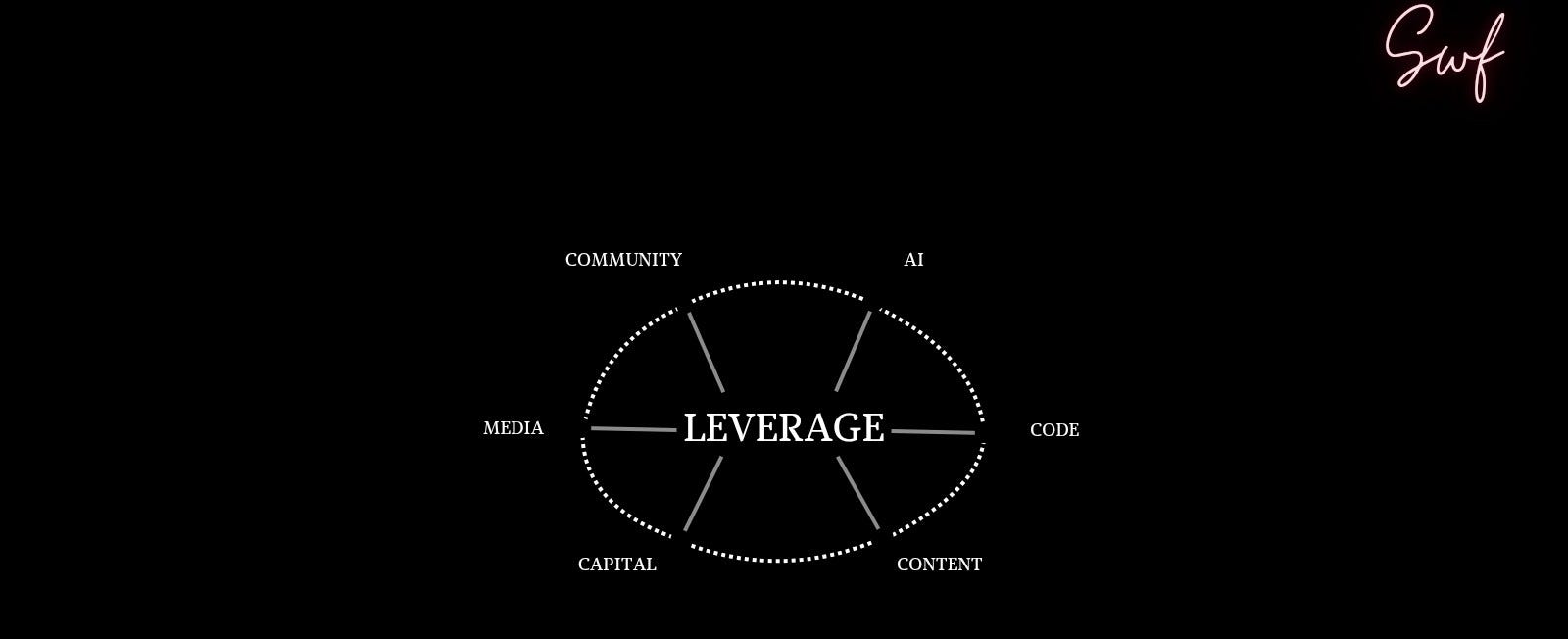
Six months from now, you can either have hours you traded for dollars, or you can have one asset that earns while you sleep.
That's the game. That's the whole game.
So what do you do with all of this?
These are the 10 moves that produce dangerously ahead outcomes while everyone else is distracted.
How many did you recognize? I'll go first, I'm making about 5 of these consistently. The other 5 I'm actively still fighting with. Perfectionism catches me on #6. I still under-invest in #8 more than I should. And #4 sneaks up on me every time I'm avoiding something hard.
So I'm right here with you.
Please know, none of this is out of reach. The discomfort you're sitting in reading this isn't a warning sign. It's a signal. Your body knew before your mind did and now you know too.
Pick the one that made you flinch. The one you skimmed past. The one you already know you've been avoiding. The one your body reacted to before your brain could argue with it.
That's the move you make first.
You don't have to do all ten. You have to do three, consistently, for six months.
Six months from now, the version of you that made three of these moves is a different operator. Not because you got smarter. Because the moves compounded quietly, in private, in the background, while everyone else was still consuming content about how to get ahead.
A personal tip; Don't wait until the signals get so loud you have no choice but to listen. Move with it, even if it feels a little scary.
A little courage right now will take you further than a lot of comfort ever could
— Jessica
About the pledge.
A pledge isn't a charge. It's a placeholder. You pick an amount you'd be willing to pay when the paid tier launches. Nothing leaves your account today. Nothing renews. You can cancel anytime before the launch, no questions.
What you get when you pledge: when the paid tier opens, your pledge locks in your founding-member rate — the lowest price the paid tier will ever be offered at. Even if I raise the price later, you stay grandfathered in at the price you pledged. You also get first access to the paid letters and the systems I'm building next.
Subscribe & pledge
Stellar article! Cuts right to it and places you right in the driver's seat.
SO GOOD